Popular Post
Showing posts with label Clarence House. Show all posts

Love at first sight

.
& still, I love.
oh, how I love this fabric.
my first foray into the Dragon was in the colourway featured in this CH advert.
on a little slipper chair, it was the one got away when I was selling some of my beloveds.
(just look at that perfect job the upholsterer did with matching pattern)

read my DRAGON EMPRESS post here 
.

seeking the Sforzas

.


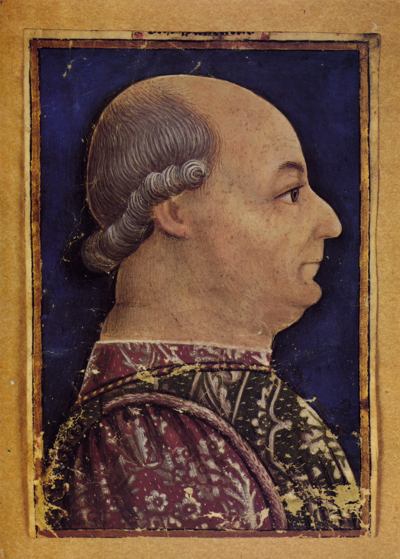
The Sforzas ruled the Duchy of Milan during the Renaissance years from 1450 to 1535. They wielded their power through intrigues, military machinations, advantageous marriage alliances and brute force. The Sforzas strengthened their power in an arranged marriage to the vainglorious Borgia family (Giovanni Sforza to Lucrezia Borgia, the marriage was late annulled). Renaissance man,Leonardo da Vinci served Ludovico Sforza and painted family members, mistresses all. The Sforzas-rock stars of the Renaissance.


The infamous Sforzas are intriguing indeed, however the Sforza I seek is an entirely different one, though the two are connected. The opulent Renaissance portraits of the Sforza family are abundant-all in splendorous raiment.

Frammento di velluto/ Historisches Museum Berna

Well-now we are getting somewhere-

here-the Sforza's in full regalia.


 Ludovico Sforza, ‘il Moro’ (the dark). Here is a man obsessed with wearing a startling variety of imprese (heraldic emblems) all at once, until his dream came true and he became Duke of Milan in 1494, when he suddenly took to more sober dress. He’d made it! (from HALI.COM)

The Milanese weavers and spinners had been imported by the first Duke from other areas- cutting the cost of the elaborate textiles. It didn't hurt that the Duke offered tax exemptions and big benefits to the artisans. An exhibition this winter Silk Gold Kermes Secrets and Technology at the Visconti and Sforza Courts in Milan highlights the Sforza's love of alto basso velvets and golden boucle with textiles and portraits side by side.


Though the Sforza beauty is subjective. Their wardrobe is not. The heavenly textiles were not just fashion of the day, but critical in the Sforza image they projected. The opulence in the textiles is evidenced in the large embossed patterns of silk and velvet. Complex layers of pattern, encrusted jewels bordering edges or belting narrow waistlines- all elevated the house of Sforza- Image was everything-the opulent velvets helped.

The Sforza I seek is a fabric, (of course)

Fragment of voided pile on pile silk velvet, gold filĂ© (gold-wrapped thread) with bouclĂ© (detail), Milan, 1470-1480. 0.66 1.08m (1'2" x 3’5"). Historisches Museum, Bern inv. 21 (from Hali.com)


Clarence House makes the divine VELLUTO SFORZA, in green, blue, red, beige and black. It should be familiar to textile addicts. It seems to pop up in all the finest rooms showcased in all the finest magazines. But wait- Pierre Frey houses SFORZA as well. The French fabric dynasty prefers "Velours" and prefers the French colour palette as well- verde, blu, carmine, viscone, nero. The fabrics- made in Italy- are identical with no distinction-except for the language. The content of both- cotton and bemberg.

it's SFORZA for Aerin Lauder-

photograph by Fernando Bengoechea (HB)


Both Elle Decor and British Vogue feature Christine D'Ornano's London home in their April issues
SFORZA -without its identity revealed. Could it be a Sforza relative?


 Jacques Grange & Sforza.

 image by Pierre Passebon 
from the Jacques Grange Interiors book


 ahhhh My own Sforza by Clarence House in black.


So-in looking at SFORZA for a project my only hesitation is the colourway selection. The Green/Verde may work-but I would prefer something with a bit of zest.
ENTER- Lee Jofa's SUNFLOWER (no that is not SFORZA in Italian-alas-it sounds less-Italian), but nonetheless it does have zest! Sunflower- made in India- is still priced like Sforza (over the moon), looks like it for the most part. Where it differs- and there in lies the RUB-& I say most appropriate to Velvets- is the content. Logically the silk and cotton with a hint of viscose make it more luxe perhaps, and it even has a soupcon of metallic at 2%. Silk is typically the preferred content-adding more sheen. Velvets always lure me-and then they present their problems. In this case the original with its cotton and bemberg has a lower lustre- The SUNFLOWER's silk content along with the metallic is adding shine. Surely the Sforza family was covered in silk? Am I comparing the Sforza to the NEW Sforza cousin unjustly ? Do I object to the addition of Metallic-adding a spot of opulence? (no, not if played down in its use with other fabrics)

Why then, can't I embrace Sunflower-distant kin to SFORZA?

Allegory of the Sforza
Family's Coat of Arms. 
Biblioteca Estense, Modena Italy


Lee Jofa's SUNFLOWER
in three of it's six colours
CASSIS, CIDER, TOBACCO


(all textile fragment images are from the exhibition noted in the text)
.

following Fowler: Part III of Fowler- then and now

.
one of my favourite wallpapers is the grand PEMBROKE DAMASK by Clarence House-

Here-at Nantclwyd Hall- John Fowler used Double Damask, (later known as Pembroke Damask.-but more about this later) The hall was given an oversized dentil when redesigned in the 1960's. Fowler balances the dentil with the Damask in a brown and white colourway-the Prince faced many of these balancing tricks throughout the decorating process at Nantclwyd. I love the mellow brown of the paper- picking up the oak colour in the doors. Everything works here, the beautifully framed portraits, the worn patina of the desk and the pair of chairs. This is just one of the spaces that Fowler comes across as a "Working Designer." He actually joined the project after Sir Clough Williams-Ellis, the architect, had added these oversized dentils, which by the way, I like, because the wallpaper is so perfect. Fowler found some of the juxtapositions Williams-Ellis added as obstacles to his work-another common problem designers face in decorating. The rooms Fowler completed are another example of his= Working It Out- beautifully resolving the issues. Though Fowler saw the rooms as moderately sized, he wisely decorated them as full blown Georgian rooms.


Keith Irvine-legend in his own right- studied with Fowler for several years and recounts his initial interview with Fowler. Having written the Prince a number of times- 'You are the only person in the world I want to work for.' Adding in his wonderful book Keith Irvine- A Life in Decoration- that "he has advised many people over the years to try the same ploy, since for me it worked." Fowler pointed out Irvine's lack of any design knowledge and passed on the young apprentice. Three weeks later the call came- Can you start on Monday? Anyone with an interest in John Fowler must read Irvine's book! His Introduction alone is priceless. I will save the details for your own perusal- but, he sums his work for Fowler up by saying it was "part paradise and part reign of terror!" It is obvious that he learned a lifetime of experiencefrom the Prince in the several years he worked with him. Imagine! Irving went on to a brief disappointing stint with Sister Parish in the States and opened his own firm.Irvine's English country house look in America has graced many homes: Jacqueline Kennedy Onassis, Katharine Graham and Rex Harrison to name a few.

following in the Fowler tradition, designer Keith Irvine uses Clarence House's Pembroke Damask in this townhouse foyer. The John Fowler hand blocked paper- Double Damask- one in the same. Keith Irvine shares the Damask's Story:
 "Fowler had discovered old fragments of this paper at Wilton House in Wiltshire when he was working there for the Earl of Pembroke, and he prevailed on the wallpaper company Coles to cut new blocks for it. As far as I know, it is the most expensive wallpaper in the world-but probably not!" The version of Pembroke Damask Irvine uses is a sharp salmon colour with white pattern and he has paired it with a paneled dado to beautiful effect.


I have recently discovered that new blogger MAGPIE worked with Keith Irvine through a comment left on a previous little augury post on Fowler and Haslam-"I love both these designers. I long for a return of interesting window treatments. Let us hope they come back soon. I worked for Keith Irvine, who started his career with John Fowler. He also was a founder of Clarence House. I'm extremely proud to be a little bit in that bloodline. The great traditional designers are the most creative, imaginative and wild, really. Just wonderful." dandy


I hope in future-"dandy will regale us with some authentic Fowler- Irvine stories.Visit here.
and thank you Dandy-aka Magpie for inspiring this post.

.

corner Castaing


.

Sometimes our decorating plans just don't work out, & then they work out for the best. After moving into my little Tudor, I was determined to use one of my all time favorite fabrics (mine & hordes of other Madeleine Castaing devotees) Clarence House's Coppelia. I did! There is a small-once said to be a housekeeper's room-I say-poor house keeper- it is if nothing else an oddity. Small-very small.

This little oddity- became a dressing room- I always wanted one. One enters the room by going up a small step into a low ceiling space about 4' x 6', then just beyond a step down (a deep one) into a 5' x 7' space. On the bright side- there was a window. Envisioning a Madeleine Castaing dressing room- I choose the ONE & only Coppelia. The window- Coppelia. The two chairs- Coppelia. In the dressing room I added a freestanding dressmaker's rack, 1920's satinwood chest, a black Empire cabinet & a favorite piece - a black Japanned dressing table. Strange little walls-very LOW, then HIGH- but it all worked. It was lovely-but It was never used. Visitors stuck their heads in, occasionally taking the step up-rarely the step down. Comments of Oh!- I love this!, my favorite room, etc. etc. The room displayed scads of jewelry on the satinwood chest, a few prized textiles- a late 18th c. French blue silk lampas with leopard beribboned tendrils floating about-Yes- they were doing leopard even then-So, nothing new. Some favorite Indian saris pre-independence India made in France-much sought after- were hanging along the walls tossed over iron rods. The dressing table- under the window (Coppelia) held some old perfume vials on a silver tray along with perfumes of all sorts.


Madeleine Castaing
(Coppelia is tacked to the back of the tufted muslin covered chair)


I had my vintage kimonos and Chinese coats hanging and some pretty gorgeous jackets- favorites too, Richard Tyler (black wool-pale pink velvet collar, cuffs-full of floral embroidery), two Chanel jackets (black- is there any other?), Issac Mizrahi-before he was targeted & Mark Jacobs, along with the others. Great clothes- but rarely ever worn now- they might as well be in the closet- and that is where they went.


The little room was converted into a closet. I needed more storage. Though I have resolved my clothes issues-I have yet to resolve some of my issues with letting go of- furniture & the like. A decorator never knows when she could sell a piece of furniture, or a mirror, or a lamp, or a-Well you know. So now I have a walk in, step down, turn around, step up Closet. Everything is pretty much still right there in the tortured maid's chamber- the clothes, the satinwood chest, the fabrics (now folded & put away) , along with lots of other stuff. I did move the dressing table to my bedroom, it is-as I said- a favorite.


...and Madame Castaing? She went off to a cozy corner in the breakfasting area (that's the portion of the kitchen with (see pics) & a long handmade cherry dining table and chairs-my Mother's). The curtains, the chair it all went- the other Madame Castaing chair is in the sitting room (that's the tv room) at a very cluttered desk.
Everything is being used- well, practically.

Much better.


wax fruit my grandMa made in the 1960's
(I said I still had some issues about letting go-this fruit Never!)


want more Coppelia & Castaing visit Emily Evans Eerdmans here . She is writing the book! Literally-& I can't wait.
or stop by the Peak of Chic here.

Dragon Empress


MY DRAGON EMPRESS ADDICTION


the Original

in the late 1800's The Dragon Empress CIXI ruled China with a ruthlessness that would make any Dragon breathe harder. CIXI ruled for 48 years-Her modi operandi: CIXI held court from a red throne shaped like a dragon- hidden behind a silk screen. Her dictums concluded with “Hear and obey." ( I think my GranMa used to say that- In fact , she had a wonderful special Chinese frock I was allowed to wear when spending the night!)

THE PRETENDERS

Hollywood's Dragon Empress

Competing Dragons


photograph of Marlene Dietrich and Anna Mae Wong in Shanghai Express


John Galiano's Dragon Empress


Alexander McQueen's kinder gentler Dragon


from style.com


HEAR & OBEY HEAR & OBEY


DRAGON EMPRESS
by Clarence House

this Dragon is currently under wraps in a Guest Room -


love the scallop hem detail


another Dragon in the Library


Drew Barrymore's Dragon


photographs from Domino Magazine

Clarence House's Dragon Empress happens to be my favorite fabric. I have used it in my own home three times. This has to be a record. A wicked combination of Turquoise, Orange and Mustard exists- and I used that colorway on a little slipper chair in my White Oak House. That was my first Dragon Empress.


The club chair in the Pink, Green and Orange was in my bedroom there and now lives quietly after an intervention of slipper covers from old crochet work. It must be in SHOCK- but I know underneath all that old white lies the Dragon.

Lastly- I returned to the Dragon when trying to finish off a chair for the Library- the Empress said "Hear and Obey-" the perfect fabric - muted tones of toast, blue, turquoise and cat tongue pink.