

|
|---|
Showing posts with label Beardo. Show all posts
Showing posts with label Beardo. Show all posts
Farmer In The City: New York's Tradition Trend
Last Friday I went with friends to Henry Public, a new salon-style bar/restaurant found in Cobble Hill. First we were served tasty beers from a staff clad in checkers and suspenders, and then we took in an ambiance of crickety wood and photos of Frederick Douglass while devouring "hamburger sandwiches" and "french fried potatoes." In short, the experience only furthered the suspicion that any new establishment opening in new york with traction among the aged 30 crowd will most likely be old-timey.


This is not news to anyone in New York with an appetite and the ability to leave their apartments: antique is in, marked by an abundance of speakeasy-style bars and rustic-tinged restaurants: see Freeman's, Marlow and Sons, Hotel Delmano, The Richardson, Walter Foods, etc. Here a predilection for old stuff in interior design is matched at the same time by a drive towards craft in food production. There are several other places in New York culture where old-timey reigns as well. My point here is not to announce several well-observed recent trends, but to group them together in an attempt to analyze their origins and consequences. It's not hard, for example, to connect the dots from the restaurant world to the rise of old-world bakeries and butcheries, to the growing interest in locally-grown, organic food products - the rise of the so-called locavore, who out of both health and environmental interests makes locally-grown products an essential priority. Dovetailing in with locavore-ism is a broader trend towards craft and self-reliance - homemade, hand-constructed, DIY, the sorts of projects found in books like "The Urban Homestead: Your Guide to Self-Sufficient Living In the Heart of the City"

The contemporary value of such drives towards urban farming, local foods, and general self-reliance cannot be underestimated in light of urgent environmental and global economic problems, such as those brought to light in the riveting documentary Collapse: through his analysis of the looming deadine of peak oil production, Michael Ruppert, the engaging, slightly paranoiac expert, effectively makes the case that "urban homesteading" is more than a youthful trend, it represents the possibility for humans to continue to survive once oil production and the modern life which it sustained begins to irrevocably decline. Old-timey or traditional food production is thus in fact quite cutting-edge - it will undoubtedly play a major factor in the restructuring of society which will most likely occur in the wake of peak oil.
You'll find the old-timey vibe on city streets as well these days, thanks to an abundance of beards, solid footwear, tweeds and flannels. Sidewalkers in Brooklyn can bear a passing resemblance to The Band:

Interestingly, The Band's look in this 1969 photo is already retro, a re-do of cowboy-era duds, and their folk-rock sound at the time already a throwback in an era of plugged-in psychedelia. A recent NYT article highlights the expansion of influence by nineteenth-century styles from restaurants to men's fashion: "This Just In From the 1890s." On a further musical note, it should be pointed out that, as is often the case, music was in on the old-timey thing before restaurants figured it out: witness the blossoming of recent subgenres like "freak folk" and the "New Weird America." Before all these guys, though, there was Animal Collective, whose band name is only one example of their ingenuity, a prescient forerunner of cultural trends towards both the rural and the communal. "Sun Will Shine" by Akron Family epitomizes both these qualities, a gospely, twangy folk-rock tune expands into a choral-voiced stomper, drawing out the blues chords in a grand expansion reminiscent of Spiritualized. Akron Family specializes in shambolic folk jamborees, and they're not alone: bands that emphasize collectivity are all the rage, as are group-vocals and afro-inflected tribal beats. In this way, "Animal Collective" isn't only a particular band name, it's almost a description for a kind of band that has emerged in the past five-ten years.
Akron Family - Sun Will Shine

What do these trends, musical, ecological, and gastronomic, share in common? We might detect in them a distrust or weariness with modernity, with the excesses of industrial society and the alienated life that it perpetuates. This is prominent in discourse on contemporary food production: the large-scale industrial farming complex, documented for example in the excellent Food, Inc. wreaks havoc not only on the earth and our biological life, but our existential life as well, obliterating a sense of connectedness. The ground beef that appears in the burger I consume has traveled an invisible path, the result of an obscured production process. In all the antique restaurants, farmer's markets, beards and folk-tunes one can sense an almost a prelapsarian hearkening for a simpler time, a simpler life, a life connected to its own roots, to the past and the traditions that engendered it.
But why now? Why has this urge become so manifest? It's been in the works, you might say, ever since Sept 11, 2001. If you buy the logic behind Time Magazine's latest cover story, the decade that will close at the end of this year represents nothing less than the 'dimming' of the American dream: "Bookended by 9/11 at the start and a financial wipeout at the end, the first 10 years of this century will very likely go down as the most dispiriting and disillusioning decade Americans have lived through in the post–World War II era." The tradition trend, you can say, is in part a widespread reaction to this passing decade of American decline, an attempt to hide-out among the nostalgic ruins of the past from the bleak forecasts of the future. Such a hiding-out was acutely felt in the wake of last year's economic collapse, when at the time the highest-grossing movie in the country was "Paul Blart: Mall Cop," a comedy in which, fittingly enough,the lead character is a fallen authority figure, an incompetent, arrogant boob in the seat of power tasked with protecting the public. The American public flooded the theaters for a bit of cinematic escapism, only to get their loser president thrust once again in their faces.

Worth noting here is a concomitant but distinctly separate trend, the rise of cuteness, whose trajectory was recently expertly traced by Jim Windolf in an article for Vanity Fair, "Addicted to Cute." Here Windolf points out that cuteness exploded in Japanese culture after the end of WWII, a result of a widespread feeling of the loss of political supremacy. The same causality, Windolf argues, is at work in the rise of cuteness in the US since 2001: our entitled sense of global hegemony shattered by the attacks, we in part sought refuge in innocent, calming visions of lolcats and other adorable internet memes.

In this historical context, what cute and old-timey share as cultural values is that they mark a feeling of the loss of authority. In her essay "What Is Authority?" from the late fifties, Hannah Arendt called attention to the broad collapse of traditional authority in the twentieth-century. This collapse led, she argued, to the generation of new forms of domination, most notably the strains of fascist and socialist totalitarianism. Authority, Arendt claims, takes its strength from being beyond argument. Authority doesn't try to persuade you, it doesn't try to violently force you, it just holds an almost mythic sway over your actions and obedience. You follow authority just because. It's not hard to see how a cultural hankering for tradition might result from a certain sense of a recent loss of American supremacy in particular and a decline in political authority in general. Tradition, Arendt says, is central to maintaining authority, because authority is all about the continuing legitimacy of the past. In the wake of the hollowing out of the American dream of the past ten years, American culture began to re-organize itself, like cells in an organism working to close over a wound.
Oddly enough, I would argue that the cute trend in part reflects the same need for authority. Cuteness affects you prior to your ability to judge it. Cuteness does not persuade or force, cuteness acts on you in a primal, biological way. You cannot evaluate or criticize it, and its effect is immediate. To experience a cute thing is to take a momentary respite from the adult world of responsibilities and decision-making: neither you nor it can be criticized or taken to task. Cuteness provides a similar escape from the demands of independent, critical thinking that submission to authority does. While the tradition trend can be seen as a reaction to contemporary circumstances, it is neither inherently good or bad, productive or harmful. Like any trend, the tradition trend contains a mixture of ideological and progressive elements. In part, it is undoubtedly an escape, a national version of going to see Paul Blart for ten years. The past remembered is never the past taken place: memory, whether personal or cultural, is always a stand-in, a cheap substitute for real events. The "good old days" evoked by Henry Public and other such places were never really that good, as Merle Haggard once sang:
While recently discussing these matters, a friend remarked that an acquaintance of hers, an internet food writer of some renown, had been sharing with her dreams of moving from New York and starting a farm. An inevitable consequence, it would seem, of a rural-obsessed metropolis: move out to the sticks! wear Hunter boots! raise vegetables while wearing a beard! Pure heaven. As Merle's song points out, such images neatly leave out all the thankless toil, labor and dedication characteristic of rural life which spurred the drive for modern technological convenience in the first place. On the other hand, the correlate drives towards local produce and self-reliance generated by a cultural interest in the lifestyles of the past will be invaluable in the near future. The American dream, insofar as it has been shored up by sixty years of geopolitical arrogance and the unshakeable dogma of free-market capitalism, has proven untenable, and hopefully the trend towards tradition will provide the grounds not for regressing to an old America, but for thinking it anew, out of the possibilities left still half-buried in the past.
Finally, there's a great Scott Walker tune, from Tilt, whose title encapsulates the beards, tweeds and speakeasies of New York 2009: "Farmer in the City." This stirring and unsettling tune is carried by a protagonist, an outsider moving across a disorienting landscape, who feels like a farmer in the city, unfamiliar with his surroundings. If the tradition trend imagines us as happy together in the past, planting crops and singing in a big group, Walker imagines the solitary farmer alone in the future. In this context it's a reminder that the wilderness is not only the rural idyll we might see on the wall of a rustic-themed pub in Williamsburg, it is also the historical future which we must venture into in order to solve the problems of today, a wilderness ultimately without the comforts of a mythic past or anthropomorphic feline.
Scott Walker - Farmer in the City
The Joys of Strange Proximity
or, Excursions in the Acid-Rainforest

Lula Cortes and Ze Ramalho - "Trilha de Sum"
Most of the rhetoric surrounding the reissue of Paebiru centers around the trope of the 'lost classic', of which this album is a shining example. The attendant myth involves almost all the original copies being lost in a warehouse fire. A lot of the pleasure of being an obscure music obsessive involves the joy of strange proximity: bringing what has been far, what has been distant and forgotten, once again into the light, to pull something from oblivion and hold it to one's ears. Then one hears not only the sound of the record, but as well the colorless ruins of the past, something almost like the crackle of old vinyl. An album that sounds something like a tropacalian mutation of Amon Duul, aka some deep acid-rainforest shit, and also it was supposed to be destroyed in a warehouse fire, is a stellar candidate for such an obsessive pleasure.
In this way, the context risks overshadowing the content. From Stylus Magazine's review: "With all the murk surrounding the album, it’s easy to overlook the frankly silly nature of what we’re dealing with. Say the following out loud: Paêbirú is an obscure Brazilian psych concept album about the four elements (earth, air, fire, water)... age and scarcity lend this record a legitimacy—and audience—it might otherwise be unable to muster."
Not to say the record doesn't have its transcendental bursts. The opening track, presented here, is evidence enough to the contrary.
The sounds of this 60-70s style of loose, improvised psychedelic music, with its genre-bleeding and unbounded vibe, are often a sonic shorthand for a historical contemporaneous understanding of freedom. It's one bound up with the 'passion for the real' mentioned in the previous post, as Alain Badiou has characterized it. Badiou has said that from a philosophical point of view, the twentieth-century is marked by a 'passion for the real'. That underlying the diverse artistic, intellectual and political movements of the last hundred years is a fundamental reckoning with a drive towards the 'real', in the sense of the visceral, the immediate, the raw, all what supposedly lies beyond the mediated, illusory, ideological facades that distract us in modern life.
It's not hard to connect how bugged-out rainforest jams might participate in this passion, which in the lives of educated urban white persons can often manifest itself as a fascination for raw-dog style, for the sounds and images associated with the concrete, the immediate, the intuitive, the pre-critical, the ecstatic. Psych record collecting = passion for the real.
It should be noted that in The Century, Badiou formulates an alternate passion for the real, but one that doesn't look for the real among any kind of 'thing', any kind of 'identity' - not even a rare record. This passion is associated by Badiou with Malevich's White on White - which is about uncovering the real as the gap between place and taking-place.
In other words, to continue the short circuit between Badiou's philosophy and music, the central claim about The Century is about the passage from psych jams to minimal beats.
SO WET, YOU'RE LIKE A RAINFOREST

Brooklyn experimental-pop outfit Animal Collection minimitizes R. Kelly's bestial erotics.
R. KELLY: THE ZOO (ANIMAL COLLECTION REMIX)

Were one to feel a slight pang of doubt, understandable to be sure, as no life on this world, no matter how serene and secure, is free from such pangs, that cosmic disco was not of particular relevance in today early 2008, one would have to look no further than this recent B-side by LCD Soundsystem in order to encounter evidence to the contrary. The beat is discoey, slow, spaced, and at the end following a goof-off drum solo there's a weird synth-ed up detour which appears without warning.
LCD SOUNDSYSTEM:FREAK OUT/STARRY EYES

The recent recipient of glowing praise among the purveyors of contemporary indie music, El Guincho has often been described as a heavily tropacalia-inflected mutation of last year's Panda Bear solo album. There is not much reason to contend, dispute or enhance this description. There is reason, however, to dispute the claim made by the recent Pitchfork review that 'there's nobody else making music like this right now': Manu Chao, anyone?
EL GUINCHO: PALMITO PARK

Little is known to this writer about Mogollar other than it can be described by means of the phrase, 'Turkish progressive folk-pop of the 60s-70s.' An ill and mellow jam, all things considered.
MOGOLLAR: KATIP ARZVHALIM YAZ YARE BOYLE
Animal Collection cover art by Bret Pittman
Why Go Beardo?
The Casual Wizard - Weekend Prince
Cosmic Parsley – Daniele Baldelli
Never Satisfied – Sarah Dash
We Can Make It – Purple Flash
Evening Standard – Jesse Rose
Flashing Lights – Kanye West
Stick Up Kid (Weekend Prince Remix) – LyfeJennings
Train (Ewan Pearson 6/8 Vocal) Goldfrapp
Walking Through Heaven – Chris & Cosey
I Wanna Dance With Numbers – Girls on Top
The Devil in Us – Black Devil Disco Club
Front Man (Idjut Boys Girthius Maximus Mix) – The Emperor Machine
Effective Placebo Affect – In Flagranti
All Flowers Must Fade – Daniel Wang
Lily was Here – Dave Stewart & Candy Dulfer
The Zoo (Weekend Prince Remix) – R. Kelly
Commune – Rub N Tug
Sorcerer – White Magic
Life’s a Beach - Studio
Mary Jane (All Night Long) – Mary J. Blige
It is generally believed that the father of beardo disco is Daniele Baldelli, DJ of the Italian club Cosmic in the early 80s. When referring to current subgenres of danceable electronic music that derive from Baldelli's sound, 'space disco', 'cosmic disco' and 'beardo disco' are all more or less interchangeable, the last of these terms stemming ostensibly from the appeal that such dense, trippy sounds have for a particular brand of grizzled layabout.
This musical strand and Baldelli's influence have in the past two years or so come again into cultural consciousness, in part because of the sheer sonic experimentalism that its purveyors are afforded. Here is Baldelli, describing his mixing style in an interview with Daniel Wang, himself a current producer of space disco who has recently relocated to Berlin:
For example, I used to play Bolero by Ravel, and on top of this I would play an African song by Africa Djola, or maybe an electronic tune by Steve Reich, with which I would mix a Malinké chant from New Guinea. Or, I would mix T-Connection with a song by Moebius and Rodelius, adding the hypnotic-tribal Izitso album of Cat Stevens, and then Lee Ritenour, but also Depeche Mode at 33 instead of 45, or a reggae voice by Yellowman at 45 instead of 33. I might mix 20 African songs on top of a Korg Electronic Drums (machine) rhythm pattern. I would play a Brazilian batucada and mix it with a song by Kraftwerk. I would also use synthesizer effects on the voices of Miriam Makeba, Jorge Ben, or Fela Kuti, or I would play the Oriental melodies of Ofra Haza or Sheila Chandra with the electronic sounds of the German label SKY.
In part Baldelli's efforts produce a kind of short-circuiting of what's called 'world' music, because the mixes and effects interrupt the ear's understanding of the 'world' and of the different exotic music styles which represent it. It's no-world music, or end-of-the-world music, producing countries that don't exist, much like Eno & Byrne's My Life in the Bush of Ghosts was designed to, and much like some of Werner Herzog's films like Fata Morgana or Lessons of Darkness, which take images of distant lands and alienate the viewer from them until they seem to longer to be documents of reality but emanations from a realm of strangeness.
Beardo Disco, however, does not begin with Baldelli, in Italy, in the 80s, or as music. It begins in a posthumously published story by Franz Kafka, "Homeless Wizards and Casual Pansies", in which the enmity between these two cultures is portrayed as a fable in the desert. The Wizards tell the Beardo Disco DJ he is the only one who can murder the pansies and liberate them, and the pansy scoffs and dismisses this as fantasy. In fact, the only solution to the deadlock, so palpable by way of its concentrated absence in the story, is a dialectical synthesis of the worlds of homeless wizards and casual pansies in the form of beardo disco. In other words Baldelli is the story's unnamed narrator:
Excerpt from
Homeless Wizards and Casual Pansies
by Franz Kafka
“..We know,” the oldest began, “that you come from the north. Our hope rests on that very point. In the north there is a way of understanding things which one cannot find here among the Casual Pansies. You know, from their cool arrogance one cannot strike a spark of common sense. They kill animals to eat them, and they disregard rotting carcasses.”
“Don’t speak so loud,” I said. “There are Casual Pansies sleeping close by.”
“You really are a stranger,” said the Wizard. “Otherwise you would know that throughout the history of the world a homeless wizard has never yet feared a casual pansy. Should we fear them? Is it not misfortune enough that we have been cast out among such people?”
“Maybe—that could be,” I said. “I’m not up to judging things which are so far removed from me. It seems to be a very old conflict—it’s probably in the blood and so perhaps will only end with blood.”
“You are very clever” said the old wizard, and they all panted even more quickly, their lungs breathing rapidly, although they were standing still. A bitter smell streamed out of their open jaws—at times I could tolerate it only by clenching my teeth. “You are very clever. What you said corresponds to our ancient doctrine. So we take their blood, and the quarrel is over.”
“Oh,” I said, more sharply than I intended, “they’ll defend themselves. They’ll shoot you down in droves with their guns.”
“You do not understand us,” he said, “a characteristic of human beings which has not disappeared, not even in the high north. We are not going to kill them. The Nile would not have enough water to wash us clean. The very sight of their living bodies makes us run away immediately into cleaner air, into the desert, which, for that very reason, is our home.”
All the wizards surrounding us—and in the meantime many more had come up from a distance—lowered their heads between the front legs and cleaned them with their paws. It was as if they wanted to conceal an aversion which was so terrible, that I would have much preferred to take a big jump and escape beyond their circle.
“So what do you intend to do,” I asked. I wanted to stand up, but I couldn’t. Two young wizards were holding me firmly from behind with their jaws biting my jacket and shirt. I had to remain sitting. “They are holding your train,” said the old wizard seriously, by way of explanation, “a mark of respect.” “They should let me go,” I cried out, turning back and forth between the old one and the young ones. “Of course, they will,” said the old one, “if that’s what you want. But it will take a little while, for, as is our habit, they have dug their teeth in deep and must first let their jaws open gradually. Meanwhile, listen to our request.” “Your conduct has not made me particularly receptive to it,” I said. “Don’t make us pay for our clumsiness,” he said, and now for the first time he brought the plaintive tone of his natural voice to his assistance. “We are poor wizards—all we have is our teeth and our epic beards. And our robes and sneakers.” “So what do you want?” I asked, only slightly reassured.
“Sir,” he cried out, and all the homeless wizards howled. To me it sounded very remotely like a melody. “Sir, you should end the quarrel which divides the world in two. Our ancestors described a man like you as the one who will do it..."
As concerns the Casual Wizard mix, let it serve as a primer for the curious and ill-informed. My own contribution here is not the inclusion of a number of beardo heavy-hitters and usual suspects, but that of a handful of r&b vocals and remixes - this kind of disco does have a kind of sexuality to it, but it's a white european sexuality, sleek and drifty. Thus the goal is to inject a foreign element, in this case the sweat and sweet musk of American R&B....Rhythm and Beard?
For more on beardo/space/cosmic disco see:


Cosmic Parsley – Daniele Baldelli
Never Satisfied – Sarah Dash
We Can Make It – Purple Flash
Evening Standard – Jesse Rose
Flashing Lights – Kanye West
Stick Up Kid (Weekend Prince Remix) – Lyfe
Train (Ewan Pearson 6/8 Vocal) Goldfrapp
Walking Through Heaven – Chris & Cosey
I Wanna Dance With Numbers – Girls on Top
The Devil in Us – Black Devil Disco Club
Front Man (Idjut Boys Girthius Maximus Mix) – The Emperor Machine
Effective Placebo Affect – In Flagranti
All Flowers Must Fade – Daniel Wang
Lily was Here – Dave Stewart & Candy Dulfer
The Zoo (Weekend Prince Remix) – R. Kelly
Commune – Rub N Tug
Sorcerer – White Magic
Life’s a Beach - Studio
Mary Jane (All Night Long) – Mary J. Blige
It is generally believed that the father of beardo disco is Daniele Baldelli, DJ of the Italian club Cosmic in the early 80s. When referring to current subgenres of danceable electronic music that derive from Baldelli's sound, 'space disco', 'cosmic disco' and 'beardo disco' are all more or less interchangeable, the last of these terms stemming ostensibly from the appeal that such dense, trippy sounds have for a particular brand of grizzled layabout.
This musical strand and Baldelli's influence have in the past two years or so come again into cultural consciousness, in part because of the sheer sonic experimentalism that its purveyors are afforded. Here is Baldelli, describing his mixing style in an interview with Daniel Wang, himself a current producer of space disco who has recently relocated to Berlin:
For example, I used to play Bolero by Ravel, and on top of this I would play an African song by Africa Djola, or maybe an electronic tune by Steve Reich, with which I would mix a Malinké chant from New Guinea. Or, I would mix T-Connection with a song by Moebius and Rodelius, adding the hypnotic-tribal Izitso album of Cat Stevens, and then Lee Ritenour, but also Depeche Mode at 33 instead of 45, or a reggae voice by Yellowman at 45 instead of 33. I might mix 20 African songs on top of a Korg Electronic Drums (machine) rhythm pattern. I would play a Brazilian batucada and mix it with a song by Kraftwerk. I would also use synthesizer effects on the voices of Miriam Makeba, Jorge Ben, or Fela Kuti, or I would play the Oriental melodies of Ofra Haza or Sheila Chandra with the electronic sounds of the German label SKY.
In part Baldelli's efforts produce a kind of short-circuiting of what's called 'world' music, because the mixes and effects interrupt the ear's understanding of the 'world' and of the different exotic music styles which represent it. It's no-world music, or end-of-the-world music, producing countries that don't exist, much like Eno & Byrne's My Life in the Bush of Ghosts was designed to, and much like some of Werner Herzog's films like Fata Morgana or Lessons of Darkness, which take images of distant lands and alienate the viewer from them until they seem to longer to be documents of reality but emanations from a realm of strangeness.
Beardo Disco, however, does not begin with Baldelli, in Italy, in the 80s, or as music. It begins in a posthumously published story by Franz Kafka, "Homeless Wizards and Casual Pansies", in which the enmity between these two cultures is portrayed as a fable in the desert. The Wizards tell the Beardo Disco DJ he is the only one who can murder the pansies and liberate them, and the pansy scoffs and dismisses this as fantasy. In fact, the only solution to the deadlock, so palpable by way of its concentrated absence in the story, is a dialectical synthesis of the worlds of homeless wizards and casual pansies in the form of beardo disco. In other words Baldelli is the story's unnamed narrator:
Excerpt from
Homeless Wizards and Casual Pansies
by Franz Kafka
“..We know,” the oldest began, “that you come from the north. Our hope rests on that very point. In the north there is a way of understanding things which one cannot find here among the Casual Pansies. You know, from their cool arrogance one cannot strike a spark of common sense. They kill animals to eat them, and they disregard rotting carcasses.”
“Don’t speak so loud,” I said. “There are Casual Pansies sleeping close by.”
“You really are a stranger,” said the Wizard. “Otherwise you would know that throughout the history of the world a homeless wizard has never yet feared a casual pansy. Should we fear them? Is it not misfortune enough that we have been cast out among such people?”
“Maybe—that could be,” I said. “I’m not up to judging things which are so far removed from me. It seems to be a very old conflict—it’s probably in the blood and so perhaps will only end with blood.”
“You are very clever” said the old wizard, and they all panted even more quickly, their lungs breathing rapidly, although they were standing still. A bitter smell streamed out of their open jaws—at times I could tolerate it only by clenching my teeth. “You are very clever. What you said corresponds to our ancient doctrine. So we take their blood, and the quarrel is over.”
“Oh,” I said, more sharply than I intended, “they’ll defend themselves. They’ll shoot you down in droves with their guns.”
“You do not understand us,” he said, “a characteristic of human beings which has not disappeared, not even in the high north. We are not going to kill them. The Nile would not have enough water to wash us clean. The very sight of their living bodies makes us run away immediately into cleaner air, into the desert, which, for that very reason, is our home.”
All the wizards surrounding us—and in the meantime many more had come up from a distance—lowered their heads between the front legs and cleaned them with their paws. It was as if they wanted to conceal an aversion which was so terrible, that I would have much preferred to take a big jump and escape beyond their circle.
“So what do you intend to do,” I asked. I wanted to stand up, but I couldn’t. Two young wizards were holding me firmly from behind with their jaws biting my jacket and shirt. I had to remain sitting. “They are holding your train,” said the old wizard seriously, by way of explanation, “a mark of respect.” “They should let me go,” I cried out, turning back and forth between the old one and the young ones. “Of course, they will,” said the old one, “if that’s what you want. But it will take a little while, for, as is our habit, they have dug their teeth in deep and must first let their jaws open gradually. Meanwhile, listen to our request.” “Your conduct has not made me particularly receptive to it,” I said. “Don’t make us pay for our clumsiness,” he said, and now for the first time he brought the plaintive tone of his natural voice to his assistance. “We are poor wizards—all we have is our teeth and our epic beards. And our robes and sneakers.” “So what do you want?” I asked, only slightly reassured.
“Sir,” he cried out, and all the homeless wizards howled. To me it sounded very remotely like a melody. “Sir, you should end the quarrel which divides the world in two. Our ancestors described a man like you as the one who will do it..."
As concerns the Casual Wizard mix, let it serve as a primer for the curious and ill-informed. My own contribution here is not the inclusion of a number of beardo heavy-hitters and usual suspects, but that of a handful of r&b vocals and remixes - this kind of disco does have a kind of sexuality to it, but it's a white european sexuality, sleek and drifty. Thus the goal is to inject a foreign element, in this case the sweat and sweet musk of American R&B....Rhythm and Beard?
For more on beardo/space/cosmic disco see:





THE SLOW JAM: PAST AND FUTURE
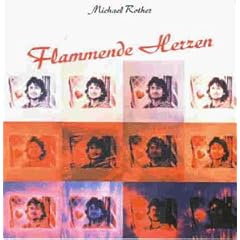
1. Michael Rother, played with Neu!, Harmonia, Cluster, and briefly Kraftwerk, is a prime stone-granite father of Krautrock. His first solo album from 1976, Flammende Herzen (Flaming Hearts) features Can's drummer, Jaki Liebezeit. Its romantic mood makes it a candidate for a new German electronic music subgenre, call it yacht-kraut-rock. (Das Boot rock?)
We offer the track Zyklodrom based on the following insight from Rother from Herzen's liner notes:
"The beginning of Zyklodrom is slowed down. We often used to switch the speed of the tape machine to create a special atmosphere...It was quite normal to work that way. I think most music sounds better when it is slowed down. I experience that often. The music suddenly has a new magic. Maybe because the sound is further away from reality."
MICHAEL ROTHER - ZYKLODROM

2. New York DJ team Rub-N-Tug's mix for the aNYthing clothing line. It is screwed. Unlike other variants of slow DJ music, however, like cosmic disco, this mix doesn't focus on slow in its drifting, soothing modality. There is no smooth sailing on a large, glistening vessel. This is slow in its queasy, decadent, grating mode. A teeth-gritting totter from side to side, waiting for the spell to pass. In a sense it's an electronic counterpart to RK's 'Adam'. It doesn't really have a beard, in the traditional sense. The beard of this mix is a wino scraggle.
There also are no tracks listed. There is open debate as to whether this mix is curated or solely original material.
RUB N TUG - BETTER WITH A SPOONFUL OF LEATHER
Subscribe to:
Posts (Atom)


