we here at A/C/K/C/L are all in favor of more 90s-style grunge rock. This is not out of personal nostalgia, because personally we were a big dork in the 90s. We're cooler now, although we still are capable of feats of dorkness like leaving the stove burner on so long that the tea kettle stopper completely melts off and the kitchen is coated in a plasticky smell that reminds us of swimming pool floaties from our childhood.
a trio from our hometown of austin texas, true widow play a sort of lightly doomy, stoned-out grunge gaze, kind of like Alice in Chains except more melodic and slower. "corpse master" is our pick from true widow's self-titled release, it sounds like Cormac McCarthy taking bong hits alone in winter. You might, if you were so inclined, trace this sound back to Earth's current sound. If Earth's first incarnation as apocalyptic drone doom spawned a host of imitators, including SunnO))), we can only hope that "corpse master" is a sign that Earth's sound today, a kind of sprawling, dusty doom-country rock, played almost impossibly slow, has been having a similar effect.
There behind Jack's head, on the wall in fanelli's in soho is a picture of cuban welterweight champ kid gavilan getting slugged hard in the jaw, here caught by the camera's eye in a stream of hanging lights: the cosmic boxer. taken from the album Tomorrow and Tomorrow and Tomorrow, Bill Fay's "Cosmic Boxer" sounds less like the hairy, visionary folk-rock you'll find on his eschatological concept record Time of the Last Persecution, and more like an eery precursor to Phil Collins-era Genesis. Check it and see for yourself: airy synthesizers, melodramatic singing with a distinct Phil-like vibe, avant-weird drum rolls. A brief existential allegory: the one who boxes in a cosmic ring, alone, for eternity, caught in a duel with himself, slugging it out for an escape. All Fay's albums are recommended, full of those sorts of imperfect dusty little gems that earn a listener's affection.
props to maya religious knives for this, who describes this 1980 reggae classic thusly: "Shit is fucking intense, some of my all time favorite jams—black + psychedelic, and perfect for springy Friday."
why is this record a classic? because it's really slow. The whole thing. It sounds like the twinklers nodding off while piloting a codeine-fuelled submarine to the underwater world of Zion, schools of incandescent laser fish passing the portal. Highlights include: pretty much every song, but especially "Since I Threw the Comb Away," which is up there with "I'm Not Ashamed" by Culture as great reggae testimonials to the proud militancy of having huge, unshorn shit-logs for hair.
BUT FIRST before the main event, a perverse appetizer, one long overdue for classical acknowledgment.
Dünyayı Kurtaran Adam (The Man Who Saves the World) is a 1982 Turkish film, part of a wave of low-budget productions from the region which slavishly and at times bizarrely imitated American Hollywood blockbusters, occasionally resorting to flat-out stealing clips from the originals when necessary. The Man Who Saves the World is thus referred to as "Turkish Star Wars", there are likewise Turkish Superman, Star Trek, etc - also Turkish E.T., in which the title character appears not as a lovable, charming plush-toy creature, but a lop-sided, flatulent space potato whose visage makes you cringe when the children hug it.
What is awesome about this clip from Turkish Star Wars shouldn't require much more explanation on my part. I will note that globally speaking, Americans are in the unique position of seeing their own culture bootlegged, imitated, xeroxed into oblivion, more than any other nationality. Like when you go to the market in Marrakesh and they're selling Beebok shoes and it's really funny. I am secretly grateful as an American that there is not some other larger, more cultural impactful country than my own that causes me constant anxiety of influence, whose pop culture I dearly love like delicious junk food but despise and need to distance myself from at the same time.
Thus part of America's cultural fate is the uncanny encounter with stuff like Turkish Star Wars, where we get our own bullshit thrown back at ourselves in mutant form.
By the way, these Turkish films often snip hodge-podge from American soundtracks, throwing them altogether for fun, you can recognize for example "Battlestar Galactica" in the following clip:
NOW, AC STEREO, MAY EDITION: EPIC SOUNDTRACKS
These are psychedelically epic, in contrast to either heroically or romantically. I wanted to put some Phillip Glass here but I couldn't download any from itunes and don't own any, inexplicably. The following line-up contains a lot of usual suspects, most of whom are prolific enough to justify combing through some odder folds in the back catalog. Comments appear below, followed by a massive dose of carefully curated clips.
1. Tangerine Dream - Beach Scene (from Thief)
80s synth-soundtrack warlords whose resume in this field is too epic for consideration. Alex B gave me this track, from Michael Mann's Thief, which plays right after James Caan, the titular thief of banks, has just pulled off the sickest heist ever, and he gets to go celebrate on the beach with his woman and James Belushi.
2. Christian Bruhn - Aravanadi - der Baron
Bruhn is a 70s-80s German soundtrack composer, this is for a German kid's TV series called Timm Thaler, an update of the Faust narrative in which the title character sells his laughter to the Baron LeFuet (anagram of "Teufel", German for "Devil").
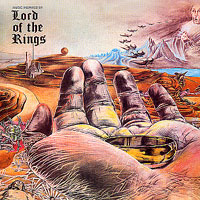
3. Bo Hansson - Black Riders & Flight to the Ford
Not really for an actual soundtrack, and we've covered it before, but dammit, it's a 70s swedish-prog imaginary soundtrack to Lord of the Rings, and it rules.
4. Ennio Morricone - Fuggire Lontano
A deep boogie TV cue. I don't know much about it. I do know that you should probably get the two-disc "Crime and Dissonance" set that came out a few years ago, because it is well-bugged.
5. Freedom Orchestra - Lucifer Rising, Part I
Part of Kenneth Anger's classic 60s psychedelic Satan movie. The soundtrack was going to be by Jimmy Page originally, but it finally fell to Bobby Beausoleil, who I think recorded part of it in prison or something. Nicely evil. Like not too much evil, like when you eat too much Oatmeal Cookie Chunk ice cream and you lie there like a sickly, friendless whale and think you might barf.
Psst: here's the whole soundtrack. It's a bit mud-fi, but pretty much as triumphantly psych-evil as you're going to get.
From Herzog's film Aguire: The Wrath of God, accompanies the insanely beautiful opening shot. Both Popol Vuh and Herzog have a similar artistic strength, that of engaging with romantic/exoticist/hippie types of tropes and traversing them until they become something beautifully otherworldly. PS: the next time someone in casual conversation disparages the Mellotron, play them this haunting, distant choir that spreads its alien angelic beauty all through the heavens.
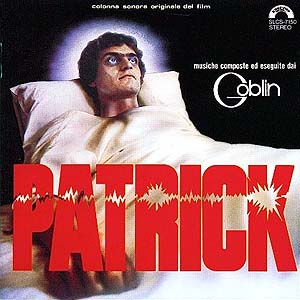
7. Goblin - Patrick
Pretty much the best epic soundtrack group ever. I mean, "Suspira"? Those crazy bells and shit? "Patrick" is from the movie of the same name. Guess what? Quiet Village ripped it off for their track "Pillow Talk". They took the scary warbliness out of it and made it a super-chill yacht jam.
8. Terry Riley - In the Summer
From some ponderous 70s eurotrash movie called "Lifespan" starring Klaus Kinski. One of the minimalist master's only film compositions, it's also I think the only track by him that has vocals on it.
9. Giorgio Moroder - Paul's Theme (Jogging Chase) From "Cat People"
Ok do I have to explain who he is? He's like Goethe, he pretty much invented everything. Plus, he produced not only "Take My Breath Away" from Top Gun, but "Call Me" by Blondie from American Gigolo. Damn.
10. Tully - Follow Me from "Sea of Joy"
Some hippie-dip soundtrack to an old Australian surfing movie. I bought this for some reason at Other Music, weirdly mesmerized by the accompanying description, despite the fact that 1. I don't care about hippie-dip folkie folk and 2., it's about surfing in Australia. In any case, most of the soundtrack is a wash, except for this track, because it is suitable moody and dark, and thus epic.
11. Marc Wilkinson - Fiend Discovered and Titles from "Blood on Satan's Claw"
We close with some actual orchestral soundtrack stuff, from a 70s British horror film not dissimilar from "The Wicker Man". Also the soundtrack has nice track titles like "Claw in the Classroom."
Now please enjoy some audio/visual excursions. Where possible, the clips reflect the aforementioned tracks, sometimes they don't because this was not possible, or because I don't care.
Don't call it a comeback. Mostly because Bristol's brightest aren't really back, that is, the new record doesn't have much to do with the same place they left off. After ten years, Portishead reappears not to cash in on their mighty trip-hop legacy but to open up a new edgier trajectory out of its ruins. Picked this CurrentTV clip up from Sasha Frere-Jones' New York blog. http://www.newyorker.com/online/blogs/sashafrerejones/
It's half an hour of Portishead doing all new material live, and it's even better than the album versions. Full band, two drummers, no mercy. whatever you wanna call their new sound, it's a new understanding of the literal spirit of r&b - rhythm and blues, ill kraut-tempered beats together with desolate torch songs. For a band that doesn't like to perform and comes together every decade to record, they could easily, if they wanted, be a pop powerhouse like that other something-head band.
Following the enormous financial success of “Easy Rider”, Peter Fonda was given full creative control with his directorial debut, “The Hired Hand”. Starring Fonda, Verna Bloom, and the ever-grizzled Warren Oates, the film rested on the dusty shelves of unsung classics for a few decades until Sundance released a DVD version a few years ago. The soundtrack, composed by 60’s folk musician, session guitarist, and one-time member of Dylan’s cortege (he is thought to be THE Mr. Tambourine Man) Bruce Langhorne, is sublime.
The album drifts along like a lethargic river-ride towards a dusty horizon that you’ll never return from. Spare, haunting, and elegant…
Sophie B. sent us this. The first and best-known of four instrumental albums recorded by the Swede Bo Hannson in the 1970's. Given her line of work, when listening to this evocative, spaced organ-driven prog record, we can't help but imagine not the raging hordes of Middle Earth armies or the picaresque tales of a friendly midget, as one might easily associate with such an album, but instead a visual accompaniment consisting of a long thin white path upon which equally long, thin and white feminine figures are striding in smart, classic outfits.
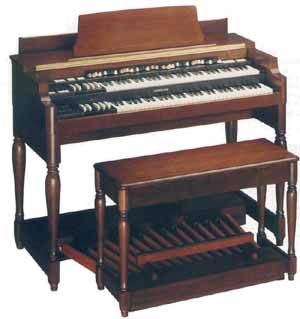
Bo Knows: Guitar Hansson garnered recognition in the sixities as part of a duo, Hansson & Karlsson, who released three instrumental albums, eventually attracting American guitarist Jimi Hendrix, who recorded a cover of their composition, 'Tax Free'. Bo Knows: Trippy psych records inspired by classic works of fantastic literature Lord of the Rings (Sagan Om Ringen) was recorded on an island off of Stockholm, on a borrowed 8-track recorder, the only one in Sweden at the time, in friend's summer home. Bo Knows: The Hammond Organ {El Orgel Hammondo}
The hammond organ, the real star of Hansson's record, was designed to imitate the function of a pipe organ's ranks of pipes in multiple registers by using additive synthesis of waveforms from harmonic series. Various functions of the Hammond derive from different harmonic combinations. For example, there is a button that says percussion, but this doesn't produce a drum sound. Instead, it refers to combination of second and third harmonic overtones, which produces a kind of jagged, distant, percussive tonal quality.
Here are two images of the Teleharmonium, a late 19th-century precursor of the Hammond from which the latter adopted its electro-mechanical tonewheel and likewise its principle of additive synthesis.
For more, time can be spent with this BBC documentary clip on the Hammond, in honor of its 70th birthday in 2006.
Stay tuned for next week for more on additive/subtractive synthesis and the harmonic series, featuring notes from Tony Conrad's recent lectures.
Today's entry is sponsored by O'nieals on the corner of Grand and Baxter in Lower Manhattan. O'nieals: home of the weekly saturday night Rowdy Cougar Meltdown (we ride for Cougar anthem 2007: Hips Don't Lie by Shakira)
There are two kinds of ethics - there are the guidelines and principles that accompany you throughout day, and form the implicit horizon for judging acts of right and wrong: for example, no matter how much you might want to stick a letter opener into the meaty neck of the crowd control manager at the New Jersey hotel casino where you're staying, not because of the tumultuous scene that would ensue, or because of a belief in the absolute sanctity of life, (a principle which is usually easy to uphold but on shaky ground when it comes to New Jersey hotel casino managers), you refrain because it would certainly mean that your friends would be cheated of a long night of slowly losing all their money at organized gambling. The other kind of ethics is the kind that finds its prime 20th-century formulation in Heidegger's Being and Time: the ethics of the call. The injunction which strikes you like lightning, out of nowhere, seemingly sent from no one, but which you have the utmost existential duty to follow. The call has a number of religious/missionary overtones. Sometimes you spend years waiting on the other end of the line, waiting for the phone to ring, to hear the call. Our friends in Religious Knives were recently disturbed to their ethical cores to hear of the near-disastrous lack of face-melting that is currently scourging the West Coast, and have organized a tour in hopes of remedying this. Faces are going around, running errands, hanging around in shopping malls, paying money to see movies starring Gena Davis, and all the while they remain tragically un-melted. See RK on these dates and support their efforts to sonically force flesh to deliquesce from the skull.
3.15.08 - Monstersorri House - Seattle, Washington*
3.16.08 - The Artistery - Portland, Oregon* 3.17.08 - House Show - Arcata, California* 3.18.08 - Luna’s Cafe - Sacramento, California* 3.19.08 - The Hemlock Tavern - San Francisco, California* 3.20.08 - The Terminal - Oakland, California 3.21.08 - The Smell - Los Angeles, California 3.22.08 - Echo Curio - Los Angeles, California
"when soldiers spoil your sleep / and writers haunt your dreams / don't strain to hear the screams / when the lights go out.....pain was all you knew / but I think you're coming through /like applause inside a zoo / when a lion gets out...when shadows take your hand / and mist is on the land / hold on to your mind / til the Christ comes back.."
From Bill Fay's concept album about the end times, his second LP from 1971
It's worth noting the opposing theological dimensions of Bill Fay and Nick Cave. Fay's song is eschatological, that is, it waits for the end of the world, the return of the Christ. The shape of Western Christian understanding of history is that life on earth happens in an interlude time, between the birth of Christ and his return. It's bracketed, bookended. Additionally, when Fay talks about 'holding on to your mind' until the return of the Christ, he's interpolating a key theological theme with regards to Christian eschatology, namely the role of what in Greek is called the kat-echon, the Restrainer, a figure who makes a brief but enigmatic appearance in the Second Letter to the Thessalonians. Here, the apostle Paul says:
"Let no one deceive you in any way; for [the day of the Lord] will not come, unless the rebellion comes first, and the man of lawlessness is revealed, the son of perdition, who opposes and exalts himself against every so-called god or object of worship, so that he takes his seat in the temple of God, proclaiming himself to be God. Do you not remember that wehn I was still wtih you I told you this? And you know what is restraining him now so that he may be revealed in his time. For the mystery of lawlessness is already at work; only he who now restrains it will do so until he is out of the way. And then the lawless one will be revealed, and the Lord Jesus will slay him with the breath of his mouth and destroy him by his appearing and his coming." (2:3-8)
What's remarkable about Paul's formulation of the Restrainer is that while he's a figure of protection and defense, his power is finite, he's only supposed to keep the 'lawless one' at bay until the right time, until the time of the Christ coming back. Jacob Taubes makes an important observation about the kat-echon, namely that it's the only force that can provide room for both eschatology and human freedom. If there isn't a terrestrial force keeping the end of the world from happening until the 'right time', if there's just an apocalypse that's going to just suddenly take place at any moment, it's hard to get up in the morning.
In other words, the kat-echon is an important mediator between the terrestrial and heavenly realms, because it addresses the question of, why is there a terrestrial realm at all? if the divine sphere is perfect, omniscient, etc., why is there a finite, fucked up world below? The only properly philosophical answer, which German Idealism with Hoelderlin, Hegel, Schelling begins to formulate as a modern parallel to Kabbalah's image of God as a broken vessel, is that God is ailing, weak, in trouble, and needs us to keep him alive, just as he needs the help of the Restrainer from keeping the apocalypse from happening until the right time.
Most of the time in political theory, from Thomas Hobbes to Carl Schmitt, the Restrainer is understood to be the Leviathan, or the sovereign, some unifying and grand political force. What we want to add here is that from a critical point of view, the Restrainer is Bill Fay. Keeping the lawless one at bay is the artist's job, because the work of art is a instance of self-legislation, of auto-nomy/nomos. The madness described in "Til the Christ Comes Back" is kept at bay by the work of art, which doesn't overcome or destroy this lawlessness but grants it a law, a nomos, by aesthetically figuring it.
Cave's story, centered around the pronouncement that Jesus will not return, is about an absence of eschatology. The two modern lovers move to a cozy house and forget the demonic annunciation. The scope of their lives begins to occlude or obscure the knowledge that if Jesus isn't coming back, the world can no longer be understood in terms of an expected final judgment. Cave's story figures an important problem of secular life: with the loss of transcendent ritual, there is no force to keep in place the knowledge of this loss. The circular time of ritual keeps the conduit between earth and heaven open. Without this circular time, there is nothing to mark the dreadful loss of this conduit, so this loss itself is lost, and the misty greyness of earthly life continues to perpetuate itself without salvation.
AC would like to inaugurate a new AC feature in which we profile a band, quote Proust and Goethe, and with said band's consent offer up a new track of theirs and simultaneously offer up a very exclusive remix of the same track by Weekend Prince. AC is honored to focus here on Religious Knives. RK's new album, It's After Dark, is recently out on Troubleman Limited. They are founded in Brooklyn and tour and play often, recently opening for Thurston Moore at the Knitting Factory. They are closely tied to the community surrounding the yearly noise-rock heavy No Fun Fest, for which Maya Miller, RK's keyboardist, often pens images of slithering, malodorous trolls with floating potato feet.
Extra creative time is spent maintaining Heavy Tapes,a cassette-only distributor of underground experimental/noise recordings, HEAVY TAPES and producing visual representations of microcosms of melting, bleeding faces and spewing, gross things. MAYA E MILLER
Drawing for the inaugural issue of Showpaper, promoter Todd P's new venture which contains information on many all-age shows in Brooklyn, primarily of the Williamsburg-Bushwick loft circuit.
We feel the name Religious Knives is appropriate as their music sounds like monks slinking around in the dark waiting to stab each other, in chiaroscuro. RK has expressed to me their profound interest in 'downer psych', a neologism which well distinguishes their particular brand of chemical jam from other strands. For example, downer psych indicates you might be listening to Gary Higgins, but you are most likely not listening to Parson Sound.
I want to talk specifically about a track from It's After Dark that attracted me to remix it because I am attracted to songs like it for remix. This is the song called Adam. Many other songs on the album are of a more clamorous New Zealand noise-rock character, or a Psychic Ills track whose inebriated state has taken a queasy, stumbling turn and is about to fall sideways into some plastic trash bags. Adam is more restrained and downer, as if once you, while unpleasantly drunk, have fallen sideways into some trash bags, you decide that for the time being you are better off there, exposed to the night air and whooshing traffic sounds and your head in some old food, and you close your eyes and wait for sleep.
Here is what Mike Bernstein from Religious Knives has said to me about Adam.
"It's part of the song cycle on "It's After Dark" that deals with the brightest part of a summer day in the city, and it reflects the experience of the desire to bury yourself back in the ground only moments after you've managed to escape burial into freedom. The lyrics are collaborative and the song is meant to be hopeful and mournful at the same time."
I can't help but notice that the title says it's after dark, while there is a song cycle dealing with the 'brightest part' of the day.
The movements of escape and burial that Mike talks about are endemic to August in the city. One August, upon hearing me opine the loss of a girlfriend to another, an old British grifter who was my roommate, a rumpled struggling writer and proud chaser of foreign ass all at the same time, told me not to worry, "Everything falls apart in August. Nothing lasts. Wars get started." In Adam I think you can hear that paradoxical state of an urban August, after you have been set free for so long by the endless sunshine you no longer have anywhere to go, and you wander streets in the dark and in the stultifying soggy windless air and wait for the cold to come and bury you again.
In a passage from Remembrance of Things Past, Marcel also calls up some sounds of summer:
"I had stretched out on my bed, with a book, in my room which sheltered, trembingly, its transparent and fragile coolness from the afternoon sun, behind the almost closed blinds through which a glimmer of daylight had nevertheless managed to push its yellow wings, remaining motionless between the wood and the glass, in a corner, poised like a butterfly. It was hardly light enough to read, and the sensation of the light's splendor was given me only by the noise of Camus...hammering dusty crates; resounding in the sonorous atmosphere that is peculiar to hot weather, they seemed to spark off scarlet stars; and also by the flies executing their little concert, the chamber music of summer: evocative not in the manner of a human tune that, heard perchance during the summer, afterwards reminds you of it but connected to summer by a more necessary link: born from beautiful days, resurrecting only when the return, containing some of their essence, it does not only awaken their image in our memory; it guarantees their return, their actual, persistent, unmediated presence."
"The hammering of dusty crates, resounding in the sonorous atmosphere peculiar to hot weather" could describe a lot of RK's percussion, particularly 'Adam's' echoey thumps. The flies that incarnate summer retain in RK's case the aura of death and corporeal decay, their chamber music becomes a doom drone. Doom music is so often associated with winter, ice and cold, can there be a summer doom, or summer noir? Would "On the Beach" by Neil Young qualify?
In his writings on the morphology of clouds, Goethe makes a useful contribution to our understanding of Downer Psych. Regarding the metaphorical significance of cloud movements, he says: "redemption is a gentle heavenward urge, and the downward pull of earthly activity, our active destiny of earthly woe." 'Adam' is the sound of windless August, when the clouds are pulled from the sky and their watery weight surrounds us, encasing us in 'earthly woe.'
Elsewhere in speaking to his assistant Eckermann Goethe goes on a very spaced-out tangent regarding humidity and the breath of the earth:
"I imagine the earth with its circle of vapors like a great living being which inhales and exhales eternally. If the earth inhales, it draws to it the circle of vapors which approaches its surface and thickens into clouds and rain. I call this state the aqueous affirmation; if it lasted beyond the prescribed time, it would drown the earth. But the earth does not permit that; it exhales again and sends back up the vapors of water which spread into all the spaces of the high atmosphere and thin out to such an extent that not only does the brilliance of the sun cross through them, but that the eternal night of infinite space, seen through them, is colored with a brilliant blue tint. I call this second state of the atmosphere the aqueous negation."
The humid swamp of earthly woe is also the planet's inward breath. Adam, in some alley of the cosmic ghetto, lies on the ground and dreams of the end of summer, and with it the casting of water vapor out in space, and its thousand crystalline reflections.