we here at A/C/K/C/L are all in favor of more 90s-style grunge rock. This is not out of personal nostalgia, because personally we were a big dork in the 90s. We're cooler now, although we still are capable of feats of dorkness like leaving the stove burner on so long that the tea kettle stopper completely melts off and the kitchen is coated in a plasticky smell that reminds us of swimming pool floaties from our childhood.
a trio from our hometown of austin texas, true widow play a sort of lightly doomy, stoned-out grunge gaze, kind of like Alice in Chains except more melodic and slower. "corpse master" is our pick from true widow's self-titled release, it sounds like Cormac McCarthy taking bong hits alone in winter. You might, if you were so inclined, trace this sound back to Earth's current sound. If Earth's first incarnation as apocalyptic drone doom spawned a host of imitators, including SunnO))), we can only hope that "corpse master" is a sign that Earth's sound today, a kind of sprawling, dusty doom-country rock, played almost impossibly slow, has been having a similar effect.
Hecuba is an electronic duo whose sounds fuses edgy electronic cabaret with fifties pop melodies - imagine if The Knife moved to Los Angeles. Like A.R.E. Weapons they enjoy street-electro topped with jukebox crooning, but Hecuba are bit more art-school queers than rowdy Alan Vega-obsessed Yankees fans. The new video for "Suffering" is an homage to fifties biker culture whose most obvious predecessor is Kenneth Anger's Kustom Kar Kommandos:
perhaps less well-known but equally awesome are photos taken by Karlheinz Weinberger in the early sixties of teen gangs in Switzerland - obsessed with American idols like Elvis and James Dean yet isolated from the cultural milieu that originally spawned them, these gangs made up their own outfits and styles, combinations of greaser gear and metal-industrial accessories that look like clothes for a post-apocalyptic sock hop. check out the horseshoe belt buckle, bullet necklace, and skull medallion.
If AC were a seminar, which it is, we would devote an entire week just to this record. Actually if there was any justice in this world, which there isn't, this record would be either the alpha or the omega of AC blog posts. But just like the world, which more often than not is a confused jumble of events lacking in both inaugurations and consummations, this record appears instead in media res.
Brian Jones was invited by Brion Gysin in 1968 to go to Jajouka, a small village in Morocco. There he made tapes of the local musicians, who have a highly localized musical tradition, going back thousands of years. Then he went back to England and studio manipulized them, adding serious dub effects, accidentally inventing the remix (not Puff Daddy). History is like that, very chancy. Like Manuel Goettsching, who helped to accidentally invent techno by recording E2-E4 in a single afternoon.
Pipes of Pan is an extremely psychedelized field recording of deep moroccan bug-outs, and a mind-blower regardless of your musical attunement and/or general blown-mind skill level.
When I studied in Prague my friend Mike and I were obsessed with this record, in the way that young minds can ascribe certain things with talismanic intensity, and hold them close like blessed weapons in foreign lands. At some point it became clear to us that with our fairly light course-loads we could fly to Morocco and spend a week there, with little academic consequence. Why my parents ever consented to this is still a mystery to me. Knowing the various fine messes and fool-headed quests that I myself have gotten into in my so-far short stay on this earth, I am going to lock up my children in a closet until they are eighteen.
Mike and I flew to Morocco because we wanted to go to Jajouka. We never found anyone who recognized the name, which we were probably not pronouncing right. But like most griftorial adventures, it was the experiences along the way, while searching for the eternal Mecca of free noise-nerds, which remain eternal stars of my own soul's innermost constellation. Morocco is sensually overwhelming, a dreamworld in the desert, enveloped in hallucinations and secret symbols. Brion Gysin's "The Process" is the best book on the matter.
We road a midnight bus from Casablanca to Marrakesh. In the back of the bus we gave two upper-snorting bootleg-hat wearing grifters a tape to play on their boombox, everyone head-nodding to "Shimmy Shimmy Yaw" in the desert darkness. We drank the freshest orange juice in the world. We brought tape recorders and recorded numerous street bands. At night the food stalls in Marrakesh would set up and we would sit and devour kebab, while steam from the grill rose in the hot air across a field of hanging lanterns. We explored Fez's labyrinthine medina. We rented bikes and rode them aimlessly. We both got the shits after the first and only time we ever ate in the French Quarter instead of the medina, although in hindsight it could have been because of the room-temperature yogurt we had earlier on the train. We took a taxi from the Meknes train station to Volubilis, a site of Roman ruins, the Westernmost tip of the Roman Empire, columns still standing in the African hills. Scorcese filmed "The Last Temptation of Christ" there, and George C. Scott walked on the stones as Patton, dreaming aloud of his past lives. We met Aziz, a young goatherd, while traversing a small hill behind the Fez medina, near a crashed car. We recorded all three of us throwing rocks at the car, then Aziz got inside and found some shoe polish and a bit of newspaper, and painted his goat-bone cane brown. Then we drum-circled on some car parts, Aziz having to tone things down for his two whitey bandmates. We gave him some stickers with fish on them. We stayed up all night in Rabat while waiting for the train back to Casablanca, drinking tea with a highly articulate, professorial grifter in a djellaba, who pontificated and seemed to have no place to go. Everywhere we asked for Jajouka.
Music instructor Brian Udelhofen conducts the Minnetonka High School Percussion Ensemble in a performance of several tracks from DJ Shadow's sample-heavy abstract hip-hop classic Endtroducing. Making a kind of weird musical spiral - Shadow takes loads of bits from David Axelrod and others for his record, then this ensemble does cover versions.
My mother taught me to play piano. Ok this isn't entirely true, I had a number of teachers. I'll say she gave the piano to me, to me and my brother, and that it was a daily part of our lives since we could read. As a child in Australia, she often performed with her family in church, they were called the 'musical Judds'. And while organized religion got left behind in her life like the seventh continent, an inviable connection between music and the life of the spirit persisted in her - that was were we always went when we traveled, to London, for example, we spent our time in cathedrals, for evensong, for organ recital, especially for choral performances. That's why when she passed away there no doubt in our minds that her beloved choir group should be called to sing at her memorial.
The unstable force of art is that it can work as solace, as ideal and as escape. Musical groups, especially those that deploy the human voice in unison, aren't just playing pretty songs, they're marking a kind of utopian moment, where everyone gets along, everyone's working together in harmony. But the general problem of depicting a world better than this one is that it act as an ideal that you work towards somehow, or its depiction can stand in like a narcotic substitute for all the bullshit of this earth.
My mother inaugurated my engagement with music, and my high school piano teacher Jim Ogilvy allowed it to take the step into open weirdness that it has never recovered from, because he taught me how to improvise. A zen'd-up bohemian who looked something like Eugene Levy's hepcat cousin, fitting considering his love of SCTV, Jim taught me jazz chords via Plato and Aristotle and only once did he ever show me his studio, a private Valhalla behind his normal house which housed, among other holy treasures, a Buchla and the third Moog ever built. Once after my first girlfriend ever broke up with me, I had to go to my piano lesson and Jim took one look at my unbearable despondence and we spent the hour and a half in thoughtful consultation.
I got my first synth from him, an Emulator II+ sampler. It is the same sampler that Ferris Bueller uses to produce the simulated cough sounds which, when played over the phone, serve as evidence to his school interlocutors that he is sick. I still have it, because it is rare and ridiculous. That's to say, these are the reasons why I can't easily get rid of it. All of its sounds are on big floppy disks, and it takes like ten minutes to load, and it is huge. But just look at it:
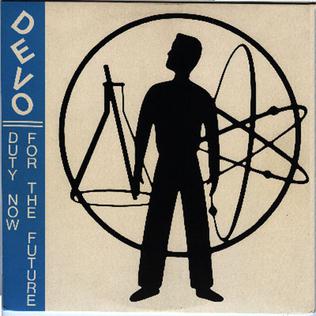
Epilogue: Yesterday following practice I took my Moog Liberator keytar and threw it in the trash gathered on the curb. Its time had come. Don't make me defend myself, you don't understand how long in coming such a parting has been. I got it ten years ago from a girl named Katherine Bentley. Working at Waterloo Records in Austin, my best friend John saw a hip, elegant-looking girl post a For Sale sign for the keyboard at the store, a sign complete with the DEVO 'Duty Now for the Future' atomic man image.
Both John and I were seventeen or eighteen or something, and we had to drive outside of Austin to where K lived with her wealthy family. It felt like a weird Fitzgerald echo, going to this upscale scene to buy a moog keytar from the intimidatingly cool art school daughter. Plus her last name was "Bentley". We were both smitten in that absurd near-mythic intensity which is the inescapable territory of youth. On the car ride home we listened to "Disorder" by Joy Division really loud, and I thought about going to summer orientation at NYU.


-e-thumb.jpg)
-e-thumb.jpg)