We're sick of winter. There, we said it. Join us this Thursday at Grace Hotel for a party designed to give the cold weather the finger as well as unwind after fashion week. Enjoy a sweet indoor pool, steam room and sauna with night plane DJs. William plays current cosmic, Harry plays classic acid, like dis:
The opening track to Kompakt's Pop Ambient 2009 compilation, available here, appears in abridged form on Klimek's masterful new record, "Movies Is Magic." The album cut lacks the gorgeous, elegaic horns that intone here as if from across a great expanse, like the sound of distant vikings blowing into hollow tusks. As you might gather, "Movies is Magic" is suffused with all manner of soundtracky scraps, which Klimek has with great agility and sophistication allowed to breathe, ebb and flow like cosmic Morricone.
"Movies is Magic" has been awarded the Pleasant Cubicle award for Best New Work Music by A/C/K/C/L
andreas vollenweider, “caverna magica” amorphous androgynous, “mountain goat” brian eno, “golden hours” throbbing gristle, “20 jazz funk greats” der zyklus, “quasar” cocteau twins, “beatrix” kate bush, “the dreaming”
gang gang dance, "bebey"
andy summers and robert fripp, “bewitched” etienne daho, “arnold layne” a mountain of one, “can’t be serious” eloy, “horizons”
oppenheimer analysis, “radiance”
chris & cosey, "walking through heaven" holger hiller, “das feuer (pilooski edit)” cerrone, “supernature” delia gonzalez & gavin russom, “black spring” tangerine dream, “thru metamorphic rock” jean-michel jarre, “oxygene part 3” vangelis, “heaven and hell, Part 1” claire hamill, “sleep”
Every time I return home to Texas, there is accounting to be done. I have become accustomed enough to reckoning with the detritus of my past that there is little left to confront, few remaining hoary ghosts or embarrassing reminders. The room I occupied through high school is now stripped of character, a carpeted repository for some plastic computer desks and, inexplicably, numerous pairs of doggie-shaped bedroom slippers.
Two days ago I found a box of minidiscs, recorded in college. The recorder itself, and thus the only way to play them back, having been long since thieved by baggage handlers at the Prague airport. The discs are labeled things like "Improv Todd's House Incomplete." "Mud and Buckets Vol. 1" etc. And concluded that the sorrow from lost time doesn't come only from a present disappeared, but from a future that never found its way, the sting of 'it might have been.'
Kompakt just issued its 9th yearly 'Total' compilation, including a jam by Superpitcher, one of my favorite Kompakt artists because of his ability to inject melancholic emotion into minimal dancefloor techno. "Disko (You Don't Care)" has a pretty recognizable vocal sample from "Back to Life" by Soul II Soul. This is one way that art can assuage the sting of searching for lost time - sampling is a way of dealing with 'it might have been' by turning the past into something else.
My girlfriend at the time these minidiscs, now lost and found at the same time, were recorded, gave me this acappella version of "Back to Life", where you can hear Carolyn Wheeler's soaring, soulful vocals unadorned. These versions along with the original are here for your enjoyment. Really the acappella is the standout, especially how the drums kick in as the heavenbound singing descends back to earth. It's featured in the opening to Hype Williams' 'Belly', to intense effect. It's such a killer track that you could use it as the opening to anything - 'Lord of the Rings', 'The Exorcist' doesn't matter.
Here's the intro to Belly, which as any youtube comment poster will tell you, is da illest intro eva. You'll notice that the Soul II Soul song has almost nothing to do with telling you realistically how to feel. Over images of a robbery, it's not tense and dramatic, it's not gritty and aggressive. It's done only to heighten your pleasure of the image. It's like in "Mean Streets" when the soundtrack is "Please Mr. Postman" during the over the top fight scene in the pool hall.
http://www.divshare.com/download/4804702-78e - - - - - - - - - This remix by Hercules & Love Affair of Goldfrapp is super dope. I'm really digging how Hercules' non-album output, the 12"s and remixes, are less about disco glitz than like early Chicago house beatdowns. So if you have homo-disco panic you can listen to this track without fear: it has melancholic sexy girl vocals, syncopated bonky-drums workout and cool African-chant samples.
Big Hair - Sold Down the River UK house duo'sm 2003 full-length, discovered through Trey. All that needs to be said about this is that it's miles away from the glut of peppy cornball house music that is the scourge of the earth. It's pretty tech-house, so it's got a disco palette but the whole thing is very tightly-wounded, minimal and groove-oriented. Deep and bugged, rather goofy sometimes like if Monty Python had a DJ act, never alienating.
Also instead of trying to craft some kind of dynamic album experience (like Booka Shade's new album for example) the group just goes straight for the jugular from start to finish, producing a live album mix of previously self-released material. Note to all musicians: do this. It doesn't matter if you're psych folk or what. Make an album that's one long megamix, somehow. It will be cool. The title of the Big Hair record refers to busking, basically, and the cover is supposed to make them look like they're sad-sack organ-grinder losers who are plying their trade.
I straight ride for this and really wish they were still putting out jams. Get it and put it on your iphone or whatever and get on your bike and ride for it.
- - - - - - - - -
Riding a bicycle should be taken as an exemplary model for how people and machines can hang out together. It doesn't spoil the environment, it's faster than just walking on feet but you also get exercise. Everything is working together. That's the music part of it. What' s so remarkable about music especially performance is that it's a person and a machine (even a guitar is a machine, or a dulcimer or whatever) working together and producing something for no reason. That's the Kant part of it, that it's beautiful because it has no point to it.
If for example you bike from your apt on south Bedford to Central Park, and you go up 6th avenue and you have headphones on, and you're listening to remixes of Allez-Allez, everything will take on that dreamlike, deceptive veneer of being together. NYC's daily tumult, the careening automobiles, the oblivious crosswalkers. You coasting by on a used Schwinn, everything kept dancing together via smooth laser disco propulsion. Dreamlike and deceptive because it can be quite an evocative experience but you know it's hiding just as much about the world as it is revealing.
That's something that irritates me about perception in general - the implicit awareness that during a moment of pronounced revelation, like the way things show themselves in concert as you're tearing uptown on a bike with headphones, the world pulls the curtain back on itself while it steps once again into the shadows at the same time. Good music soundtracking is about helping to stage an opening of the world, a particular stage for how the world can show itself.
In any case it's all about matching speeds and intensities. Have you ever listened to DJ Screw during morning rush hour? it's really weird.
Writing on the medium of cinema's fixation with the street (In his Theory of Film, read it or at least pretend to have), Siegfried Kracauer says that he means in particular
"the city street with its ever-moving anonymous crowds. The kaleidoscopic sights mingle with unidentified shapes and fragmentary visual complexes and cancel each other out, thereby preventing the onlooker from following up any of the innumerable suggestions they offer. What appears to him are not so much sharp-contoured individuals engaged in this or that definable pursuit as loose throngs of sketchy, completely indeterminate figures. Each has a story, yet the story is not given. Instead, an incessant flow of possibilities and near-intangible meanings appears. This flow casts its spell over the flaneur or even creates him. The flaneur is intoxicated with life in the street - life eternally dissolving the patterns which it is about to form."
But for all the talk of flaneurs, those meandering, contemplative urban dandies that show up all the time in Kracauer and Benjamin, or Guy Debord for that matter, do they ever get on a bike and just go for it? or do they just loll around poking at things with their canes and think about the commodity fetish?
BUT FIRST before the main event, a perverse appetizer, one long overdue for classical acknowledgment.
Dünyayı Kurtaran Adam (The Man Who Saves the World) is a 1982 Turkish film, part of a wave of low-budget productions from the region which slavishly and at times bizarrely imitated American Hollywood blockbusters, occasionally resorting to flat-out stealing clips from the originals when necessary. The Man Who Saves the World is thus referred to as "Turkish Star Wars", there are likewise Turkish Superman, Star Trek, etc - also Turkish E.T., in which the title character appears not as a lovable, charming plush-toy creature, but a lop-sided, flatulent space potato whose visage makes you cringe when the children hug it.
What is awesome about this clip from Turkish Star Wars shouldn't require much more explanation on my part. I will note that globally speaking, Americans are in the unique position of seeing their own culture bootlegged, imitated, xeroxed into oblivion, more than any other nationality. Like when you go to the market in Marrakesh and they're selling Beebok shoes and it's really funny. I am secretly grateful as an American that there is not some other larger, more cultural impactful country than my own that causes me constant anxiety of influence, whose pop culture I dearly love like delicious junk food but despise and need to distance myself from at the same time.
Thus part of America's cultural fate is the uncanny encounter with stuff like Turkish Star Wars, where we get our own bullshit thrown back at ourselves in mutant form.
By the way, these Turkish films often snip hodge-podge from American soundtracks, throwing them altogether for fun, you can recognize for example "Battlestar Galactica" in the following clip:
NOW, AC STEREO, MAY EDITION: EPIC SOUNDTRACKS
These are psychedelically epic, in contrast to either heroically or romantically. I wanted to put some Phillip Glass here but I couldn't download any from itunes and don't own any, inexplicably. The following line-up contains a lot of usual suspects, most of whom are prolific enough to justify combing through some odder folds in the back catalog. Comments appear below, followed by a massive dose of carefully curated clips.
1. Tangerine Dream - Beach Scene (from Thief)
80s synth-soundtrack warlords whose resume in this field is too epic for consideration. Alex B gave me this track, from Michael Mann's Thief, which plays right after James Caan, the titular thief of banks, has just pulled off the sickest heist ever, and he gets to go celebrate on the beach with his woman and James Belushi.
2. Christian Bruhn - Aravanadi - der Baron
Bruhn is a 70s-80s German soundtrack composer, this is for a German kid's TV series called Timm Thaler, an update of the Faust narrative in which the title character sells his laughter to the Baron LeFuet (anagram of "Teufel", German for "Devil").
3. Bo Hansson - Black Riders & Flight to the Ford
Not really for an actual soundtrack, and we've covered it before, but dammit, it's a 70s swedish-prog imaginary soundtrack to Lord of the Rings, and it rules.
4. Ennio Morricone - Fuggire Lontano
A deep boogie TV cue. I don't know much about it. I do know that you should probably get the two-disc "Crime and Dissonance" set that came out a few years ago, because it is well-bugged.
5. Freedom Orchestra - Lucifer Rising, Part I
Part of Kenneth Anger's classic 60s psychedelic Satan movie. The soundtrack was going to be by Jimmy Page originally, but it finally fell to Bobby Beausoleil, who I think recorded part of it in prison or something. Nicely evil. Like not too much evil, like when you eat too much Oatmeal Cookie Chunk ice cream and you lie there like a sickly, friendless whale and think you might barf.
Psst: here's the whole soundtrack. It's a bit mud-fi, but pretty much as triumphantly psych-evil as you're going to get.
From Herzog's film Aguire: The Wrath of God, accompanies the insanely beautiful opening shot. Both Popol Vuh and Herzog have a similar artistic strength, that of engaging with romantic/exoticist/hippie types of tropes and traversing them until they become something beautifully otherworldly. PS: the next time someone in casual conversation disparages the Mellotron, play them this haunting, distant choir that spreads its alien angelic beauty all through the heavens.
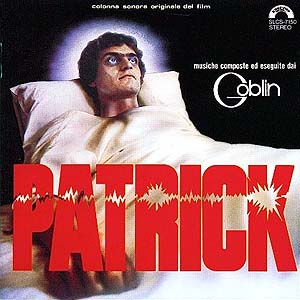
7. Goblin - Patrick
Pretty much the best epic soundtrack group ever. I mean, "Suspira"? Those crazy bells and shit? "Patrick" is from the movie of the same name. Guess what? Quiet Village ripped it off for their track "Pillow Talk". They took the scary warbliness out of it and made it a super-chill yacht jam.
8. Terry Riley - In the Summer
From some ponderous 70s eurotrash movie called "Lifespan" starring Klaus Kinski. One of the minimalist master's only film compositions, it's also I think the only track by him that has vocals on it.
9. Giorgio Moroder - Paul's Theme (Jogging Chase) From "Cat People"
Ok do I have to explain who he is? He's like Goethe, he pretty much invented everything. Plus, he produced not only "Take My Breath Away" from Top Gun, but "Call Me" by Blondie from American Gigolo. Damn.
10. Tully - Follow Me from "Sea of Joy"
Some hippie-dip soundtrack to an old Australian surfing movie. I bought this for some reason at Other Music, weirdly mesmerized by the accompanying description, despite the fact that 1. I don't care about hippie-dip folkie folk and 2., it's about surfing in Australia. In any case, most of the soundtrack is a wash, except for this track, because it is suitable moody and dark, and thus epic.
11. Marc Wilkinson - Fiend Discovered and Titles from "Blood on Satan's Claw"
We close with some actual orchestral soundtrack stuff, from a 70s British horror film not dissimilar from "The Wicker Man". Also the soundtrack has nice track titles like "Claw in the Classroom."
Now please enjoy some audio/visual excursions. Where possible, the clips reflect the aforementioned tracks, sometimes they don't because this was not possible, or because I don't care.
The inaugural March edition of AC radio is curated by me.
1. Thief at your Window - Endless Grift Recorded last April at Explosion Robinson, a basement studio on Grand Street in Brooklyn whose name was adopted by the urban clothing store which had previously occupied the space. Engineering and guitars: Darian Zahedi. 2. You May Be Blue (Neighbors Remix) - Vetiver Topanga folkie Vetiver refits his own track from the album 'To Find Me Gone', turning the dark folk-rock number into a very Superpitcher/Kompakt-like brooding minimal-techno stomper. 3. Space Disco - Universal Robot Band Eleven minute epic track that is a very strong blueprint for the now-resurgent 'space disco' style: short on chic/village people/bee gees disco decorations, long on hairy tribal weirdness. Sounds a bit like that 'Cloud One' record if it achieved lysergic velocity. 4. Train (Ewan Pearson Remix) - Goldfrapp 5. Once Upon a Time - The Heliocentrics Belongs in consideration with the DJ-Shadow playing high school band and the Hypnotic Music Ensemble. It seems that live bands have figured out how to play like Entroducing and are ready to start killing shit. 6. Idle Hands - Harlem River Drive Jonathan sent us this, a burning latin funk album lead by Eddie Palmieri. This is the deepest, most muscular track. The kind of intense music that will temporarily erase your memory and make you forget you have other songs you could be listening to. 7. Track 5 - Ulaan Khol Stephen R. Smith's new solo record, very recommended if you are pleasantly susceptible to soaring guitar squalls and other types of mesmerizing sonic excess. 8. National Anthem to the Moon - Bruce Haack From 'Electric Lucifer'. Deeply eccentric outsider-art moogness from the same camp as White Noise, American Metaphysical Circus, etc. 9. Snakedriver - Jesus and Mary Chain From the Crow soundtrack! You know what, as a matter of fact, I want you to go listen to that whole record right now. 10. Anambra - Ozo Renowned for being one of the close-out tracks at NY disco impresario David Mancuso's legendary loft parties. Not even really a disco track at all, just deep spiritual beats from no country. 11. Effective Placebo Effect - In Flagranti 12. Hung from the Moon - Earth 13. Super Inuit - Holy Fuck
Jonathan F. sent us this track, accompanied by the appellate "proto-Weekend Prince", apparently in reference to the latter's respective predilections for "In the Air Tonight" and the narcotized tempos of Houston rap. As AC is concerned with music, its criticism, and the conditions which make its criticism possible, we have to stop and ask ourselves some questions:
1.Is cough syrup addictive? 2. Are slowed-down beats addictive? 3. Why is 'In the Air Tonight' so awesome compared to the nauseating remainder of Collin's solo work? 4. What does the adjective 'proto' indicate? 5. Does Phil Collins like cough syrup?
1. Yes. Physical addiction is debated by experts, psychological addiction is well-documented. In 2005, six pharmaceutical doctors were put on trial in Houston for illegally distributing the drug. A report from ABC News at the time says: "Besides purple stuff and syzurp, the addictive cough syrup concoction has also been known as "lean," "drank," "barre," "purple jelly," or simply, "syrup." Those who have had the drug refer to its intake as 'sipping on syzurp.'"
Cough syrup contains dextromethorphan (DXM), a chemical which when isolated at home via an impromptu extraction method involving a washing machine as a centrifuge and then concentrated at 10x in pill form and administered for recreational purposes to a 17 year old Acknowledged Classic causes the latter to spend the night in hallucinatory sweats and have to call his parents the next morning.
2. Yes. This is part of a larger addiction which I would call something like, addiction to what in French is called ''un petite rien'. That's a nice expression, a 'little nothing'. Oh what's that, oh don't worry it's a little nothing. Just a small little nothing there, over in the corner, next to your briefcase. Forget about it. In other words, AC suffers from an addiction to That Which Is Only One Degree More Than Nothing at All. This is easy to understand when thinking about minimalism, minimal paintings or minimal beats, or the kind of Minimal Social Club that our friend Volker thought about opening: "There won't be anything on the walls, maybe a Malevitch, in an empty room. We'll sit and listen to minimal beats and not talk very much."
But slowness is another variation of this. Jonathan mentioned to us that in the Phil C. remix, the drums almost sound like they're going to stop, like the whole thing is going to fall down. There is so much persistent vitality there in the sounds of beats that keep happening against the threat or pressure of slowing down and stopping forever. It's like Beckett's "I can't go on, I will go on" as music. The sound of DJ Screw is really the sound of a struggle against death, a darkly heroic sound. It's the sonic equivalent of the movie "Flatliners."
3. That's a good question.
4. In Greek proto simply indicates 'first' (eschato means last). In contemporary usage, however, it indicates a kind of pre-appearance of something prior to its full manifestation, the way that certain nationalistic or populist strains in culture or politics in Germany prior to 1930 have been referred to by historians as 'proto-Fascist'. In this sense, 'proto' is a purely historical designation. You can't use it in the present, you can only use it to talk about something past, and then only in light of something that followed it, you're making a historical argument, and one that implies progress: 'here's not the real thing but a nascent, embryonic form of it', in which case you're dealing with looking at something which is not itself. Which always weirds us out. It's a morphological claim. Like if you call the Stooges 'proto-punk', you imply a certain idea of punk and then say that punk is there in the Stooges' sound, but not as itself, as some other ghostly form of itself. Often new musical trends, like the re-birth of electro, will re-engage with an older style at the moment of its proto-ness in order to find all kinds of other paths and potentials that never got developed, that fell away like ungrown branches once the path from the 'proto-version' to the 'real thing' got developed.
5. I don't know.
The affective relation between chemicals and music is of significance to us because it is part of a larger concern for a materialist understanding of music. Not how good the song is, but where you are when you hear it, who you're with, what you're on, what you ate last, etc. The reason that Screw exploded in Houston is because helps set a particular stage: out late at night, driving around an urban metropolis slowly in a car, and making use of particular chemicals that affect sense perception to match the situation's velocity. It's good music supervision.
In honor of Valentine's Day, AC recommends the new Louis Vuitton line of Syzzzurp
AC DOES NOT CONDONE OR ENDORSE THE DRINKING OF COUGH SYRUP. It does recommend those little Cold-Eeze sucky things if you start to feel sick, though. Just slurp a couple of those and they'll set you straight.
It is generally believed that the origin of Weekend Prince lies in the confluence of the impact of the beloved web TV show 'yacht rock' and the name of a certain over-the-counter sexual supplement.
While these are undoubtedly keystones in the formation of WP, they must be understood not as the foundation, the first and oldest chunks of stone, but as the sort of accidental lightning that awaken a lost, unconscious force. But even to say they awakened this force is to speak falsely. This force was never sleeping, because it was never awake, because it never was born until it was born again. This intervention that re-ignites a past that never was is what Walter Benjamin calls redemption.
The primal scene of Weekend Prince is on a small leisure boat operating at cruising speed at night just off the coast of Maui. My parents, the reader should understand, took their children to Maui countless times. My childhood is so marked by the manicured golf courses, the condos, the crystal waters and virginal sand, the happy fish playing among the coral, that for years I surprised to learn that my contemporaries did not identify. As if until the age of six my parents had taught me to count in base six and upon my first day of school I realize with cold shock that the world is in base ten.
On the boat with a handful of other tourists. That gentle, free air of white middle class paradise. The warm wind, the calm, loving water. The smooth grooves on the boombox, which, my mother learns from the captain, is the title song to a film, 'Lily Was Here', by Dave Stewart, performed with saxophonist Candy Dulfer.
It is literally the smoothest song ever. It is just so smooth in that button-down 80s way, you can't f**k with it. You can't f**k with it but you can imagine being fifteen and hearing it for the first time at night on a boat with your family on vacation in Hawaii. And your mother, who loves jazz and all music passionately, and who once asked you if John Coltrane was black, goes and finds the soundtrack and plays it all the time, and it's one of those songs you secretly like but you'd never admit it, because you're fifteen and you listen to Bad Religion and wear Doc Martens, even though you are like, maybe the least hard dude in the entire suburban high school you have just started attending.
You will note that 'Lily Was Here' is included in the latest Weekend Prince mix, The Casual Wizard.
It is a secret Beardo Disco jam of the highest order, and it is presented to you in video and audio forms below.
Katt Williams explains the importance of good music supervision, namely by demonstrating how Rick Ross' "Hustlin" is appropriate for every situation in the world.